Abuse Prevention & Education
Teen Self-Reported Abuse of OTC Cough/Cold Medicines Remain Low

For 50 years, the annual Monitoring the Future survey has been conducted with researchers at the University of Michigan, Ann Arbor, and funded by the National Institute on Drug Abuse (NIDA), a branch of the National Institutes of Health.
Each year since 1975, this survey has been administered to students in 8th, 10th, and 12th grades who self-report their substance use behaviors over various time periods, such as past 30 days, 12 months, or lifetime.
Survey questions dig into students’ perceptions of harm, disapproval of use, and perceived availability of substances, including over-the-counter (OTC) cough and cold medicines that contain the active ingredient dextromethorphan (DXM).
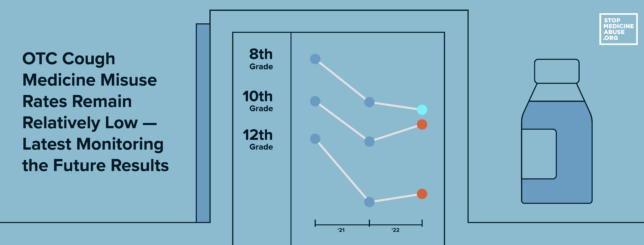
Rates of OTC cough and cold medicine abuse have been reported in the survey since 2006. Over the years, we’ve monitored trends across each of the three grades surveyed. While rates of abuse changed slightly for all age groups in 2025, the shifts weren’t statistically significant.
Breakdown of OTC Cough & Cold Medicine Abuse Across Grade Levels Surveyed
- The percentage of eighth graders who self-reported OTC medicine abuse decreased year-over-year from 4.4 to 4.2%. This decline is encouraging to see as we’ve been keeping an eye on this age group since the highest rate of 4.6% was reported in 2020.
- Among 10th graders, the rate of abuse went up from 4% to 5.1%. This was the only group to have rates increase by more than a percentage point. The highest rate of 6% was reported in 2009.
- Among 12th graders, abuse rates increased from 2.8% in 2024 to 3.1% in 2025. The highest rate of 6.9% was reported when the survey first started tracking cough medicine abuse in 2006.
Looking more holistically, “one of the main findings from the survey this year is that teen use of the most common drugs has not rebounded after the large decline during the pandemic,” noted Richard Miech, research professor at the University of Michigan’s Institute of Research and team lead of the MTF study. “Many expected teen drug use levels to return to pre-pandemic levels once the social distancing policies were lifted, but this has not happened.”
We find this to be an encouraging finding, though as Nora Volkow, director of NIH’s National Institute on Drug Abuse, said, “It is critical to continue to monitor these trends closely to understand how we can continue to support teens in making healthy choices and target interventions where and when they are needed.”

Additional Key Findings Include
- Teen abstinence from marijuana, alcohol and nicotine remained stable for all three of the grades that were surveyed.
- Alcohol, cannabis, nicotine vaping / pouch use also remained stable across grade levels.
- Daily use of energy drinks or energy shots is at or near record highs among all grades.
In Closing
The Monitoring the Future survey is updated each year to factor in relevant changes in overall substance use trends. We’ll continue to keep a close eye on new trends that emerge, as well specific trends related to OTC cough and cold medicine abuse, and keep you informed accordingly.
For more information on ways to help your teen learn how to make safe choices with OTC medicines, check out the links below.